

A Commentary upon the Book of the Revelation: Volume 2, Lectures on Chapters 4–11 by James Durham
Original price was: £36.99.£24.95Current price is: £24.95.
3 in stock
- Secure Payments
- All orders fully tracked
- Ship world-wide
- All books are US tariff free
Napthali Press / RHB. d.w. 632pp.
English Puritanism and Scottish Presbyterianism in the seventeenth century had many bright and shining lights. Of these, James Durham (1622–1658), ranks alongside the greatest of his generation, for his theological depth, faithful preaching, and particularly for his moderate spirit at a time when such was in scarce supply. While he could have been a professor of theology in any university, Durham instead spent a brief ten year ministry preaching and lecturing for the most part in the Inner-Kirk of Glasgow Cathedral. It was thought that he poured so much of himself into his studies for sermons and lectures that it brought about his early death at the age of thirty-six. His works were often reprinted and left an impression that lasted for centuries. Recently, all of his sermons in two volumes and his lectures on the Book of Job and on the Ten Commandments have been published in new critical editions. Continuing with his lectures, the publishers are pleased to offer now a new critical edition of James Durham’s largest book, which, while it is his more theologically intense work, retains the same practical Uses and Applications of his sermons and other lectures.
Volume 2, Lectures on Chapters 4–11 is the second of three projected volumes. The theological digressions interspersed throughout cover such subjects as the nature and extent of the merit of Christ’s death, Mede’s Synchronisms, Christ’s Intercession, the idolatry of the Church of Rome, Prophesying, the Waldenses, and the founding of true churches by reformation out of corrupt churches. The text has been collated with a 1653 manuscript which in places is significantly different from the published edition of 1658. A new biography will appear in volume 3. Volume 3 will also contain a bibliographical essay covering Durham’s works and manuscripts, as well as the indices, including an index of errata of prior editions.
John Owen called James Durham, “one of good learning, sound judgement, and every way ‘a workman that needeth not to be ashamed.'” To read Durham on Revelation is to find proof of this. His commentary provides what was, as Principal John MacLeod said, “in past days, the accepted Protestant view of that book”. While Durham’s historicist reading of Revelation is no longer the standard view, that should not deter readers, for, as Spurgeon said, “it would not be easy to find a more sensible and instructive work than this old-fashioned exposition. We cannot accept its interpretations of the mysteries, but the mystery of the gospel fills it with sweet savour.” The finest treasure in this commentary is not, however, Durham’s exegetical work (helpful though this is!). Contained in his commentary are independent treatises which are the purest of theological gold. Make what you will of Durham’s interpretation of Revelation, but extended essays on the Trinity, the call to the ministry, the nature of justification, and so on present Reformed thought at its best. As Richard A. Muller has said, this work “offers significant access to seventeenth-century Reformed and Presbyterian thought … Durham’s work illustrates the relationship of Scripture with doctrine and piety and dogmatics.” Taken all in all, readers of this work will surely ultimately agree with Durham’s contemporary Robert Blair, who said of this work, “Many Writers have done worthily, but thou excellest them all.”
Author
James Durham (1622–1658) served as minister at Black Friars Church in Glasgow as a chaplain to King Charles II and as a minister at the Inner Kirk of the cathedral in Glasgow. Known for his piety, wisdom, and scholarship, Durham stands as one of the great Scottish Presbyterians of the seventeenth century.
Series Editor
Chris Coldwell has published fine quality editions of Puritan, Presbyterian, and Reformed literature for over thirty years through Naphtali Press. He is also the general editor and publisher of The Confessional Presbyterian journal.
Endorsement
“This commentary on Revelation provides what was, as Principal John MacLeod said, ‘in past days, the accepted Protestant view of that book.’ While James Durham’s historicist reading of Revelation is no longer the standard view, that should not deter readers, for, as Spurgeon said, ‘it would not be easy to find a more sensible and instructive work than this old-fashioned exposition. We cannot accept its interpretations of the mysteries, but the mystery of the gospel fills it with sweet savour.’ The finest treasure in this commentary is not, however, Durham’s exegetical work (helpful though this is!). Contained in his commentary are independent treatises which are the purest of theological gold. These extended essays present Reformed thought at its best. As Richard A. Muller has said, this work “offers significant access to seventeenth-century Reformed and Presbyterian thought … Durham’s work illustrates the relationship of Scripture with doctrine and piety and dogmatics.” — Donald John MacLean, author of James Durham (1622–1658): And the Gospel Offer in its Seventeenth-Century Context.
| Weight | 1428 g |
|---|---|
| Dimensions | 19.3 × 5.1 × 25.9 cm |
| Isbn | 9781601788610 |
| Isbn13 | 9781601788610 |
| Publisher | Reformation Heritage Books |
| Authors | James Durham |
| Date | 2021 |
| Binding | Hardcover |
| Language | en |
| Pages | 504 |
You must be logged in to post a review.
Related products
- Sale!

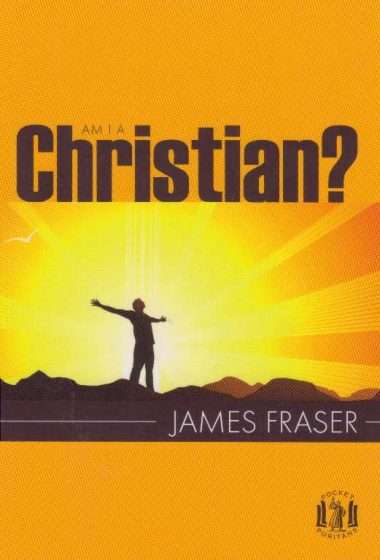
Am I a Christian ? By James Fraser of Brae
Original price was: £3.25.£2.95Current price is: £2.95. - Sale!
Samuel Rutherford & His Friends By Faith Cook
Original price was: £6.25.£4.95Current price is: £4.95.

Reviews
There are no reviews yet.